ABOUT THE PROGRAM
The workplace has undergone a fundamental transformation. In response to the current regional conflict and the need for greater energy conservation, organisations across both the public and private sectors are increasingly encouraged to adopt hybrid working arrangements to reduce electricity consumption, commuting time, fuel expenses, and overall operating costs while maintaining business continuity and productivity.
In addition, many organisations particularly multinational corporations, financial institutions, fintech companies, ICT firms, and other knowledge-based industries have continued to embrace the flexible and hybrid work models introduced during the COVID-19 pandemic. These arrangements are now recognised as an effective way to enhance employee engagement, attract and retain talent, improve work-life flexibility, and build more agile and resilient organisations.
While hybrid working offers significant benefits, it also presents a new set of leadership challenges. Leaders are expected to manage teams across multiple work locations, maintain accountability without micromanaging, foster trust in both physical and virtual environments, sustain team cohesion, and ensure that communication, collaboration, and performance remain consistent regardless of where employees work. Without the right leadership approach, organisations may experience reduced employee engagement, communication breakdowns, inconsistent performance expectations, proximity bias, digital fatigue, employee burnout, and declining team morale.
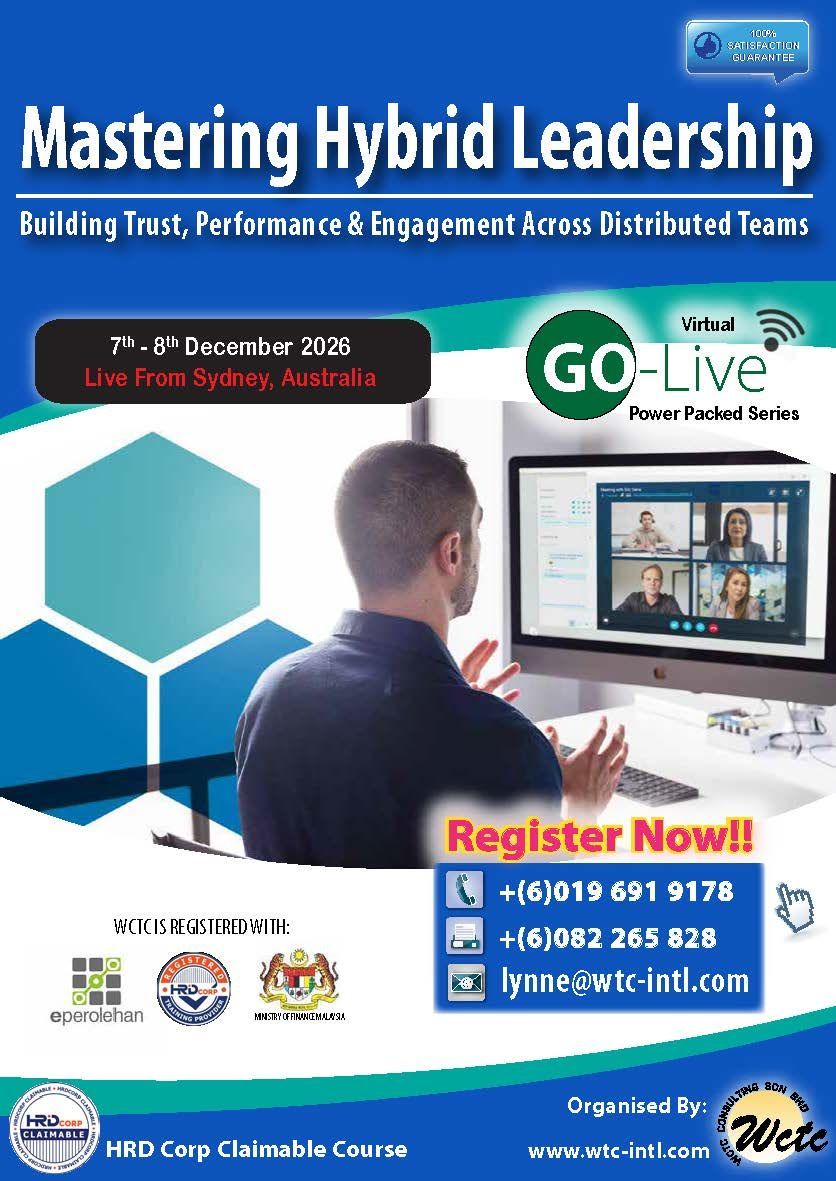
Mastering Hybrid Leadership: Building Trust, Performance & Engagement Across Distributed Teams equips leaders with the practical skills, tools, and mindset needed to lead confidently in today's hybrid workplace. Through practical discussions, case studies, role plays, and interactive activities, participants will learn how to establish accountability, communicate effectively across distributed teams, facilitate productive virtual and hybrid meetings, measure performance based on outcomes, build trust and psychological safety, manage conflict and employee wellbeing, and cultivate a sustainable hybrid work culture that drives high performance while keeping teams engaged, connected, and motivated.
LEARNING OBJECTIVES
- DIFFERENTIATE between between hybrid, remote and distributed work models, and identify their leadership challenges and opportunities.
- ESTABLISH clear goals, exepctations and accountability for managing hybrid teams.
- APPLY effective communication, collaboration tools and digital technologies in a hybrid work environment.
- FACILITATE productive virtual and hybrid meetings using appropriate facilitation techniques.
- LEAD high-performing hybrid teams by building trust, collaboration and employee engagement.
- EVALUATE team performance using clear metrics, outcomes, feedback and one-to-one performance reviews.
- MANAGE conflict, communication challenges and employee wellbeing in a hybrid work environment.
- IMPLEMENT practical strategies to sustain a high-performing hybrid workplace through coaching, feedback and recognition.
Other Workshops: